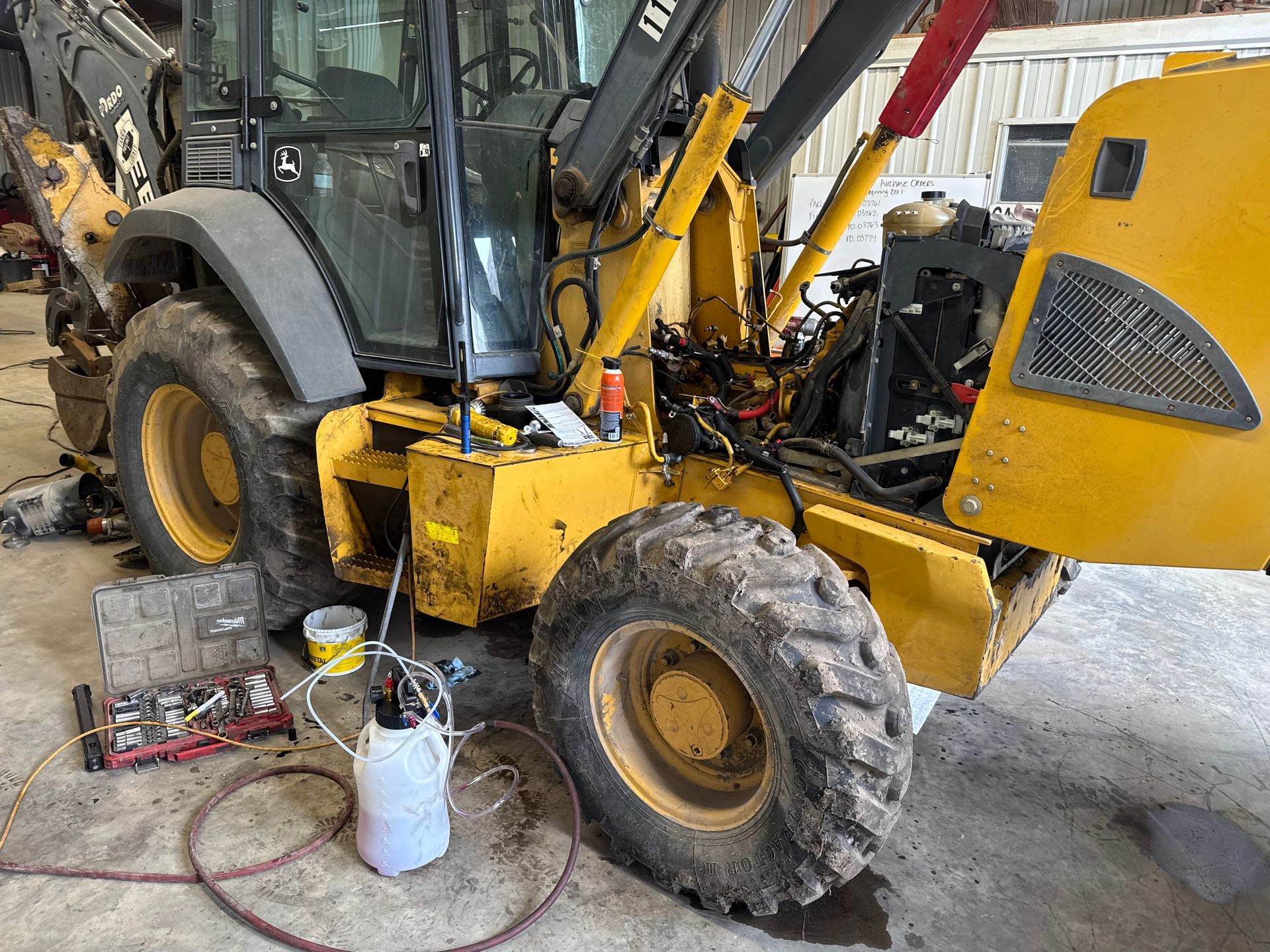

Pinpointing Electronic Faults Before Replacing Components
Computer Diagnostics in McKinney for diesel trucks and heavy equipment with unexplained performance issues
Modern electronic control systems monitor dozens of sensors and manage fuel injection timing, emissions controls, hydraulic valve operation, and transmission shifting through constant data processing, but a single failed sensor or corroded connection can trigger multiple fault codes that don't clearly identify the actual problem. Advanced computer diagnostic equipment reads stored fault codes from diesel trucks, construction machinery, and farm equipment, then performs active tests that verify whether each code reflects a genuine component failure or a symptom of an upstream issue. Halvy Equipment Services uses diagnostic tools throughout McKinney that communicate with electronic control modules to retrieve fault history, view live sensor data, and perform actuator tests that isolate electrical faults from mechanical problems masquerading as electronic failures.
Diagnostic testing involves more than retrieving codes—it requires interpreting whether those codes point to failed parts or simply document the control system's response to abnormal operating conditions. A code indicating low fuel rail pressure might reflect a failing high-pressure pump, but it could also result from a clogged filter, contaminated fuel, or even a faulty pressure sensor reporting incorrect data. Proper diagnostics measure actual fuel pressure with a mechanical gauge, compare that reading to what the sensor reports, and verify the pump's output under load before determining which component actually failed.
Schedule diagnostic testing when equipment runs poorly without obvious mechanical causes or when fault codes appear without clear symptoms.
How Electronic System Diagnostics Work
The diagnostic process connects scan tools to the equipment's diagnostic port, establishing communication with electronic control modules that govern engine operation, emissions systems, transmission function, and hydraulic controls. Reading live data shows what each sensor reports in real time, revealing whether values fall within normal ranges or indicate problems. Comparing sensor readings to actual measured values—like using a mechanical pressure gauge to verify what an electronic pressure sensor reports—identifies sensors providing incorrect data that trigger false fault codes.
After accurate diagnostics, unnecessary part replacement stops draining budgets on components that weren't actually faulty. Equipment that previously ran poorly or displayed confusing symptoms operates normally once the actual failed component is replaced rather than the parts that fault codes seemed to implicate. Diagnostic accuracy particularly matters for expensive electronic control modules, which are often replaced unnecessarily when the actual problem is damaged wiring or failed sensors feeding bad data to a functioning module.
Expertise with modern electronic control systems means interpreting diagnostic data within the context of how the equipment actually performs. Intermittent faults require different diagnostic approaches than permanent failures, and problems that only appear under load or at operating temperature won't show up during static testing. Mobile diagnostic capability brings the scan tools and testing equipment to wherever the equipment operates, whether that's a job site, farm, or along a roadside when a diesel truck loses power during a delivery run.
Answers to Diagnostic Questions
Equipment operators often ask about diagnostic accuracy, how electronic problems differ from mechanical issues, and why some faults prove difficult to isolate.
What can computer diagnostics identify that visual inspection cannot?
Electronic diagnostics retrieve stored fault codes that document intermittent problems even after symptoms disappear, read sensor data to verify whether components report accurate information, and perform actuator tests that cycle valves, injectors, and other electrically-controlled parts to verify proper operation without disassembling equipment.
How do you determine whether a fault code indicates a failed part or a symptom?
The process involves verifying sensor readings against actual measured values using mechanical gauges, inspecting wiring for damage or corrosion that could cause sensor circuit faults, and testing whether replacing a sensor changes the reported value or whether the reading stays incorrect because the control system is accurately reporting an actual mechanical problem.
Why do some electronic faults only appear intermittently?
Vibration can cause momentary opens in corroded connections, temperature cycling makes marginal solder joints fail when hot, and damaged wire insulation creates shorts only when the harness flexes during operation. These intermittent faults often require testing under actual operating conditions rather than static diagnostics with the equipment parked.
When should diagnostic testing happen for equipment operating in McKinney's temperature extremes?
Cold weather exposes weak batteries, marginal starter motors, and fuel gelling issues, while summer heat stresses cooling systems and reveals electrical connections that develop high resistance when hot. Diagnostic testing before seasonal extremes identifies components likely to fail when conditions worsen.
What documentation do diagnostic tools provide after testing?
Scan tools generate reports showing all retrieved fault codes, their frequency and conditions when they occurred, and current sensor readings across all monitored systems. This documentation helps track whether problems recur after repairs and provides baseline data for comparing future performance.
Halvy Equipment Services applies diagnostic expertise that reduces troubleshooting time and prevents unnecessary component replacement. Request professional diagnostic testing when electronic faults disrupt equipment operation or when performance problems lack clear mechanical causes.