Structural Repairs That Handle Equipment Loading
Welding and Fabrication in McKinney for cracked frames, broken mounts, and damaged structural components
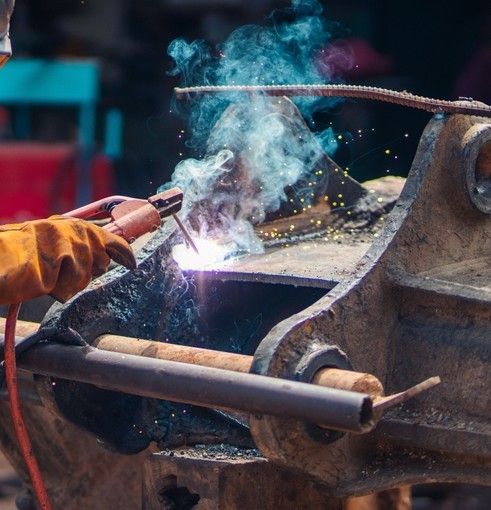
A cracked excavator boom, fractured trailer frame, or broken equipment mount doesn't just prevent operation—it creates a safety hazard that stops work immediately until structural integrity is restored. Welding repairs for damaged equipment components address cracks in load-bearing members, failures at stress points where repeated loading causes metal fatigue, and impact damage from collisions or dropped loads. Halvy Equipment Services provides welding and fabrication throughout McKinney for contractors and agricultural operators whose equipment sustains structural damage during demanding commercial applications. Fabrication services reinforce damaged areas or replace components when original parts are unavailable or when strengthening prevents recurring failures at known weak points.
The welding process begins with preparing the damaged area by removing paint, rust, and contamination that would compromise weld penetration and strength. For cracks in structural components, preparation includes drilling stop-holes at crack ends to prevent further propagation, then beveling edges to allow full-penetration welds through the material thickness. Material identification determines proper welding procedure, filler metal selection, and whether preheat or post-weld heat treatment is needed for high-strength alloys commonly used in equipment frames and booms.
Contact our team to evaluate structural damage and determine whether repair or fabrication best addresses your equipment needs.
Why Structural Repairs Require Specific Procedures
Equipment structural repairs involve more than simply filling a crack with weld metal. Proper procedure requires selecting filler metal that matches or exceeds base material strength, using welding parameters that achieve full fusion without creating brittle heat-affected zones, and often adding reinforcement plates at high-stress areas where cracks originated. For trailer frames and equipment subject to DOT regulations, repairs must meet specific standards for load-bearing welds.
Once repairs are completed, the affected area regains structural integrity sufficient to handle normal operating loads without visible flexing or gap opening at the previous crack location. Equipment returns to service with welds that distribute stress across a wider area than the original failure point. For components that failed due to inadequate original design, reinforcement during repair prevents the same failure from recurring under identical loading conditions.
Fabrication services address situations where damaged parts are obsolete, cost-prohibitive to source, or where custom components improve equipment function. This includes fabricating attachment brackets, replacing damaged hydraulic tank mounts, or building specialized tools for agricultural applications. Mobile welding capability means repairs happen on-site for equipment that's difficult to transport or when downtime costs justify bringing the welder to the machine.
Common Questions About Equipment Welding
Operators typically want to understand what makes equipment welding different from general welding and how repairs hold up under continued heavy use.
What makes welding structural equipment components different from standard welding?
Equipment structural members use high-strength steel alloys that require specific filler metals, controlled heat input to prevent brittle zones, and often preheat procedures to avoid cracking as welds cool. The welding procedure must account for the loads these components carry and the cyclic stress they experience during operation.
How do you prevent cracks from continuing to grow after welding?
The process includes drilling small holes at each crack tip to stop propagation, then beveling the crack to allow full-penetration welding through the material thickness. For cracks caused by stress concentration, adding reinforcement plates distributes loads across a larger area to prevent recurrence.
When does fabrication make more sense than ordering replacement parts?
Custom fabrication works well when original parts have long lead times that would leave equipment idle, when obsolete equipment needs components no longer manufactured, or when repeated failures at a specific point suggest the original design was inadequate for actual operating conditions.
What determines whether damaged equipment can be welded on-site in McKinney or needs shop facilities?
Part accessibility, need for precise fixturing during welding, and whether the repair requires controlled preheat or post-weld heat treatment all affect location feasibility. Many frame cracks, broken mounts, and structural repairs can be completed where the equipment sits, while complex fabrication often requires shop equipment.
Why do some equipment welds crack again after repair?
Inadequate penetration, wrong filler metal selection, or failure to address the underlying cause all lead to repeat failures. If a structural member cracked due to excessive loading or poor load distribution, simply filling the crack without reinforcement means the same stress concentration will crack the repair.
Durable welding repairs extend equipment life by restoring structural integrity with procedures matched to the materials and loading involved. Halvy Equipment Services evaluates damage to determine the repair approach that addresses both the visible failure and the conditions that caused it, so reach out when structural damage sidelines your equipment.