Restoring Full Power to Hydraulic Functions
Hydraulic System Repair in McKinney for weak cylinders, pressure loss, and fluid leaks affecting equipment performance
Hydraulic systems power the loader arms that lift materials, the stabilizer jacks that level equipment, and the cylinders that angle blades and control implement position, but internal seal wear gradually reduces pressure until cylinders move slowly under load or won't hold position when stopped. Leak detection, pressure testing, and system troubleshooting identify whether poor performance stems from a failing pump unable to generate rated pressure, worn cylinder seals allowing internal bypass, or control valves that no longer direct full flow to the actuators. Halvy Equipment Services diagnoses and repairs hydraulic pumps, cylinders, hoses, valves, and related components for construction and agricultural equipment operating across McKinney, where summer heat accelerates seal degradation and winter operation thickens fluid enough to strain pumps during cold starts.
Diagnosis begins with measuring actual system pressure under operating conditions, then isolating which circuit or component fails to perform. Connecting pressure gauges at multiple test ports throughout the system reveals whether the pump generates adequate pressure at the outlet, whether that pressure drops across the control valve, and whether cylinders develop expected force when extending under load. External leaks appear as fluid seepage at hose fittings or wet spots on cylinder rods, while internal leaks show up as cylinders that drift downward under load or equipment that slowly loses function even though fluid level remains adequate.
Arrange hydraulic service when equipment response becomes sluggish or when visible leaks indicate seal failure.
What Proper Hydraulic Performance Requires
Maintaining hydraulic system function involves more than topping off fluid—it requires pressure capability throughout the system, valves that direct flow without internal leakage, and cylinders with seals tight enough to prevent bypass under working pressure. Pump output testing measures whether flow and pressure meet specifications, revealing wear that reduces efficiency even before complete failure. Valve testing verifies that spools shift fully and return to neutral without sticking, and that internal passages don't leak enough to bleed off pressure needed at the cylinders.
You'll notice repaired hydraulic systems respond immediately when you activate controls, with cylinders extending at full speed even under maximum load. Equipment holds position when you stop mid-cycle instead of slowly drifting as internal leaks allow fluid to bypass worn seals. Loader arms lift rated capacity without hesitation, stabilizer jacks extend firmly enough to support equipment weight without settling, and implement positioning stays accurate because cylinders maintain their commanded position throughout the work cycle.
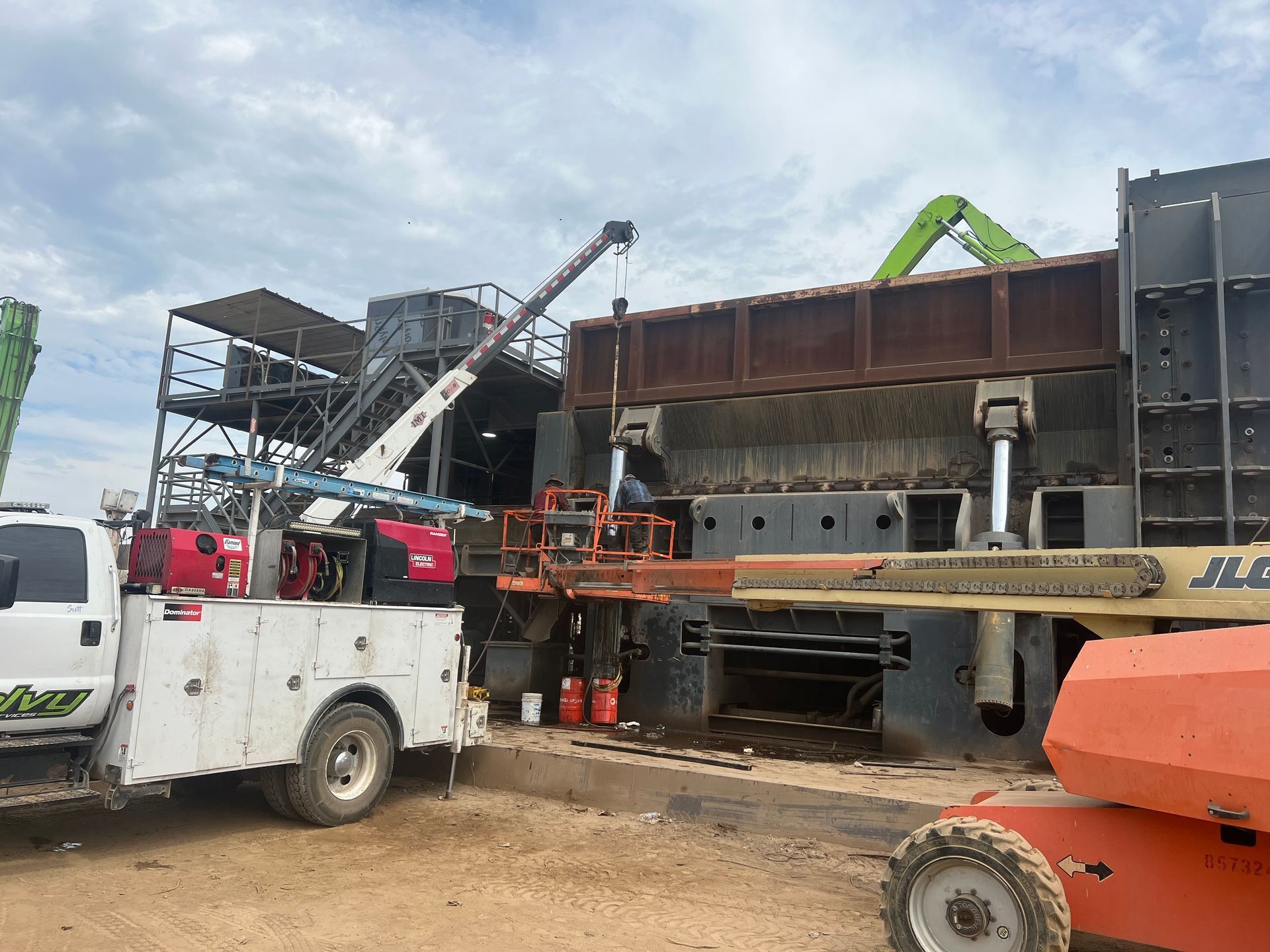
Hydraulic repairs often include replacing hoses that show surface cracking from age and sun exposure before they burst under pressure, installing new seals in cylinders where rod wipers no longer prevent contamination entry, and rebuilding control valves that develop the internal wear causing sluggish operation. Mobile repair capability means cylinder replacement and hose assembly happens on-site, reducing downtime for equipment that's difficult to transport or currently positioned in locations where moving it requires completing the work cycle it's unable to finish.
Questions Before Hydraulic Repairs
Equipment operators typically want to understand what causes hydraulic problems, how repairs restore performance, and when preventive replacement makes sense.
What causes hydraulic cylinders to lose power gradually over time?
Internal piston seals wear from contamination in the fluid, allowing pressurized oil to bypass from the extension side to the retraction side rather than developing full force. This bypass increases as seals wear further, eventually reaching the point where cylinders barely move under load even though the pump generates normal pressure.
How does pressure testing identify which hydraulic component has failed?
Installing gauges at the pump outlet, control valve inlet and outlet, and cylinder ports shows where pressure drops occur in the system. If the pump generates full pressure but a specific cylinder shows low pressure at its port, the problem lies in the valve or circuit feeding that cylinder rather than in pump output or overall system pressure.
Why do hydraulic hoses crack and fail on equipment operating in McKinney?
Ultraviolet exposure degrades rubber compounds in hose covers, creating surface cracks that eventually penetrate to the reinforcement layer and allow high-pressure oil to weep through the hose wall. Temperature cycling between cold winter mornings and hot summer afternoons accelerates this degradation, especially on hoses with southern exposure to direct sun.
When should hydraulic fluid be changed in construction and farm equipment?
Fluid analysis reveals contamination levels, additive depletion, and whether water has entered the system, but visual inspection catches gross contamination between analysis intervals. Dark, opaque fluid or visible particles indicate contamination levels high enough to accelerate pump and valve wear even if equipment still operates.
What's involved in rebuilding a hydraulic cylinder versus replacing it?
Rebuilding involves disassembling the cylinder, replacing all seals and worn components, honing the barrel if scoring is present, and replacing the rod if pitting has damaged the seal surface. Replacement makes sense when barrel damage is too severe to hone out or when the cylinder design is obsolete and rebuilding costs approach replacement pricing.
Halvy Equipment Services provides mobile hydraulic repairs that restore equipment productivity without the delays associated with transporting machinery to a shop. Request onsite hydraulic diagnostics when performance declines or when leaks indicate developing seal failure.