Trailer Systems Inspected and Corrected Onsite
Trailer Repair in McKinney for commercial, utility, agricultural, and equipment trailers with brake, electrical, or structural problems
Trailer failures often appear without warning—brake lights stop working before a highway trip, air brakes lose pressure during hookup, suspension components crack under load, or structural damage develops from road impacts and corrosion. These problems create safety concerns, fail roadside inspections, and prevent trailers from being loaded or legally operated until repairs are completed. Halvy Equipment Services provides trailer repair throughout McKinney and the surrounding North Texas region, addressing brake system failures, electrical component problems, suspension damage, lighting issues, and structural repairs that affect commercial, utility, agricultural, and equipment trailers. Mobile service travels to trailer locations, inspecting and repairing systems onsite so equipment returns to safe operation without requiring transport to a shop.
Trailer systems fail from continuous vibration, exposure to road salt and moisture, impact damage from loading and unloading, and the stress cycles that come from repeated weight loading. Brake components wear from use and corrode from environmental exposure, electrical connections fail where moisture penetrates wire junctions, suspension springs and hangers crack from fatigue, lighting circuits develop shorts or opens through damaged wiring, and structural members bend or crack from overloading or impact.
Schedule an onsite trailer inspection to identify current problems and potential failures before they create roadside breakdowns or safety concerns.
How Trailer Repairs Address Safety and Compliance
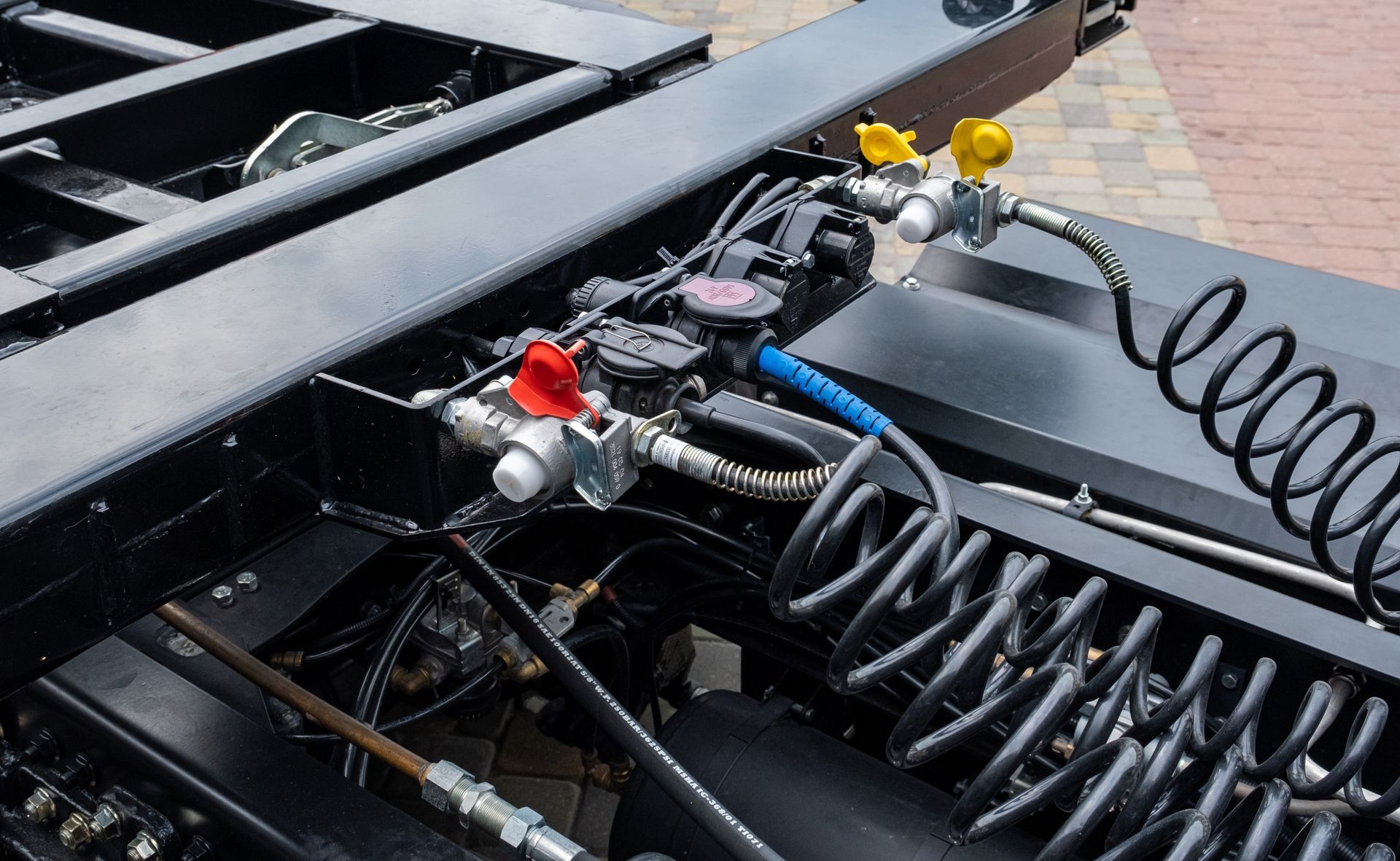
Brake system repairs involve testing air pressure buildup and hold, inspecting brake chamber diaphragms and pushrods, measuring lining thickness and drum condition, checking slack adjuster operation, and tracing air lines for leaks that cause slow pressure loss or complete system failure. Electrical repairs trace circuits from the tow vehicle connection through junction boxes to each lighting component, identifying corroded pins, damaged wiring insulation, and failed bulbs or LED assemblies. Suspension inspection evaluates spring condition, hanger integrity, equalizer function, and axle alignment to ensure trailers track correctly and distribute weight evenly.
After repairs are finished, trailers operate safely with braking systems that respond predictably, lighting that remains visible in all conditions, suspension components that support loads without excessive movement or noise, and structural members that handle rated capacities without flexing or cracking. Preventative inspections completed by Halvy Equipment Services identify components approaching the end of their service life so replacements happen during scheduled maintenance rather than as emergency roadside repairs.
Structural repairs address frame cracks, cross member damage, floor deterioration, and ramp problems that develop from loading impacts and corrosion. Welding and fabrication restore structural integrity when members have cracked or bent, and replacement components are installed when corrosion has weakened original materials beyond safe repair limits.
Questions Before Starting Your Project
Trailer operators want to understand what common failures develop and how to recognize problems before they create roadside emergencies or compliance issues.
What types of trailers can be serviced with mobile repair?
Mobile service covers commercial trailers including flatbeds, enclosed vans, and dump trailers, utility trailers used for equipment and material hauling, agricultural trailers for livestock and hay, and equipment trailers designed for heavy machinery transport throughout McKinney and North Texas.
How often should trailer brake systems be inspected?
Brake systems should be inspected at least annually or more frequently for trailers in constant commercial use—inspections measure lining thickness, check for air leaks, test chamber operation, verify slack adjuster function, and identify components that have reached wear limits before complete failure occurs.
What causes trailer electrical systems to fail repeatedly?
Electrical failures often result from moisture entering connections where the trailer harness plugs into the tow vehicle or where wires pass through the trailer frame—corrosion builds at these junction points, creating resistance that causes lights to dim, flicker, or fail completely until connections are cleaned and sealed properly.
Why do suspension components crack and when should they be replaced?
Spring hangers and equalizers experience constant stress cycles as trailers are loaded and unloaded, causing metal fatigue that eventually produces cracks—these should be replaced when cracks are visible during inspection rather than waiting for complete failure, which can cause axles to shift and create dangerous handling problems.
What should operators check before each use to identify developing problems?
Pre-trip inspection should include checking brake air pressure buildup time, testing that all lights function correctly, looking for fluid leaks near brake chambers, inspecting tire condition and pressure, and examining suspension components for visible cracks or loose fasteners that signal developing failures.
Halvy Equipment Services operates mobile trailer repair throughout the North Texas area with inspection and repair capability that keeps commercial, utility, agricultural, and equipment trailers operating safely and in compliance. Request trailer repair services to address current problems or schedule preventative inspection to catch issues early.